This is the multi-page printable view of this section. Click here to print.
Release Notes
1 - Selector Release Notes Version 3686 Oct 6 to Dec 15 2025
Selector Release Notes for Version 3686
New Features and Enhancements
Slack Bot Usage Metrics
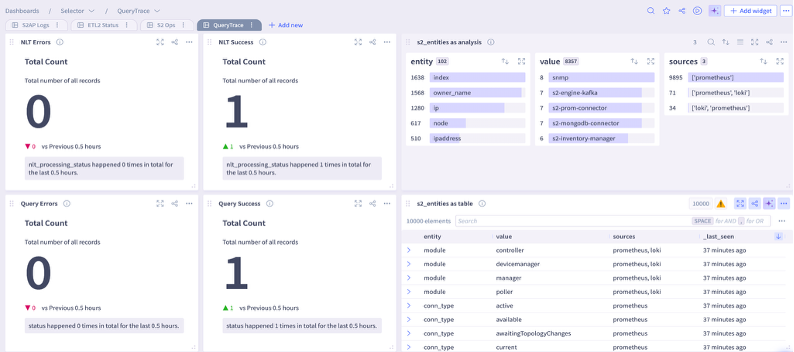
A new queryable fetches Natural Language queries and its usage metrics: s2_query_trace
You can find the user who executed the query, the s2ql query, the status, and the time it took to return the response.
For example, you can display the results of the s2_query_trace as a table:

Or you can display the s2_query_trace queryable in a dashboard (see lower right panel):
Disable or Remove Inactive Users
Identity Access Management (IAM) now monitors and disables or deletes users who have been inactive for a specified number of days.
You enable this setting by initiating a request to Selector Software or Customer Success representatives.
Configure Customised Thresholds Based on Vendor
Customers now have the ability to define custom thresholds for any fixed pipeline. This allows customers greater granularity to set thresholds for each vendor.
For example, you can configure separate thresholds for the CPU utilization metric for each vendor such as Cisco, Arista, Fortigate, and so on.
You configure this feature by initiating a request to Selector Software or Customer Success representatives.
Enhanced Dashboard Variables in NL Queries
Queries can use predefined variables, retrieve the default values, and use those values for query building. This feature integrates Dashboard variable resolution into the existing Natural Language Translation (NLT) query system.
For example, if the s2ql query is device_status as big-text where fqdn=~{{test-device-sw}} and the NL phrase is how is test-device-sw, the correct response is returned.
Sorting Capabilities in UDF Tables
Sorting is available for tables using a transform User-Defined Function (UDF) to allow a customer-preferred sorting order.
This feature enhances the current supported S2AP UI sorting by adding support for sorting of UDF tables
For example, the query name,aggregate.count:No_of_job_ids in automation_observability_state as table where hasParent =no group-by name order-by aggregate.count:desc in last 7 days produces the result sorted by the aggregate count in descending order.
2 - Selector Release Notes Version 3531 Jul 15 to Oct 1 2025
Selector Release Notes for Version 3531
New Features and Enhancements
New Toggle for PKCE
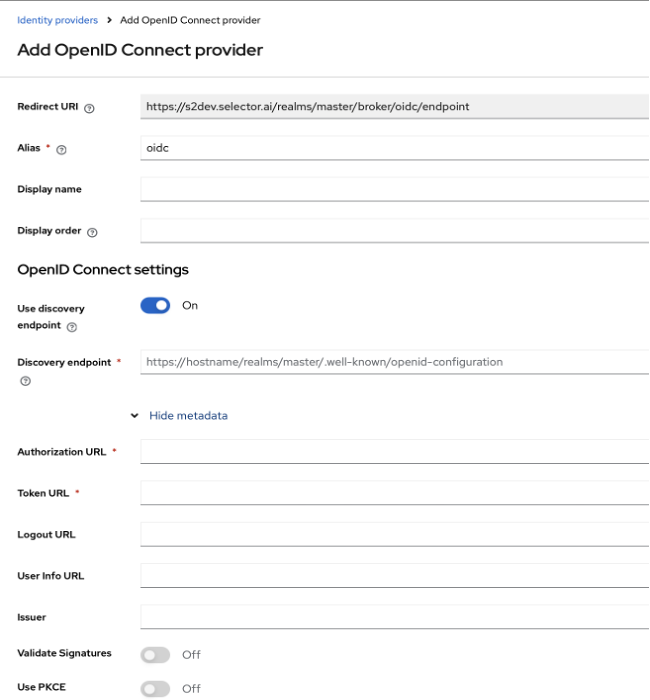
A new toggle for the PKCE option for OIDC is included for SSO Configuration (see bottom toggle below)
Password Policy Restrictions for Local Users
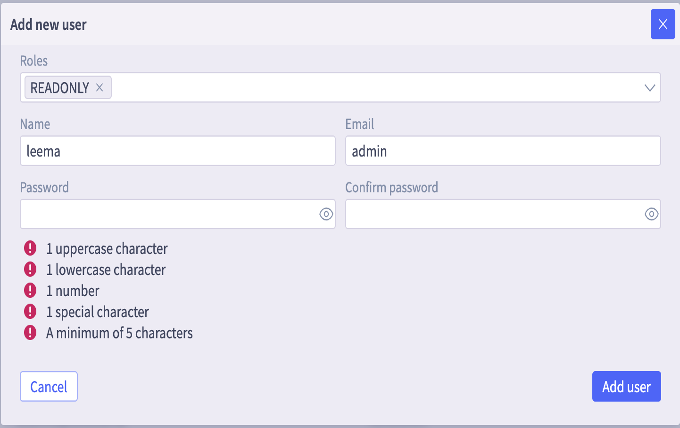
Password policy restrictions for Local user accounts are modified for better access security.
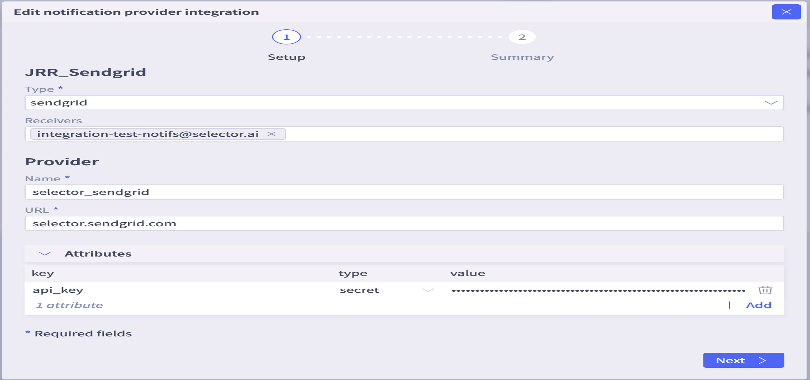
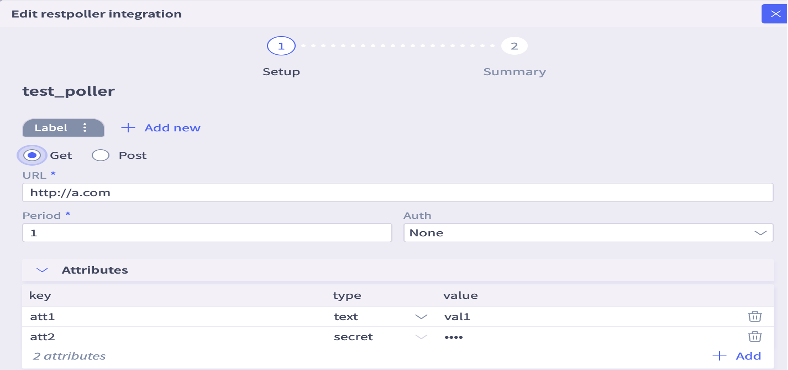
Notification Provider and Rest Poller Password Masked
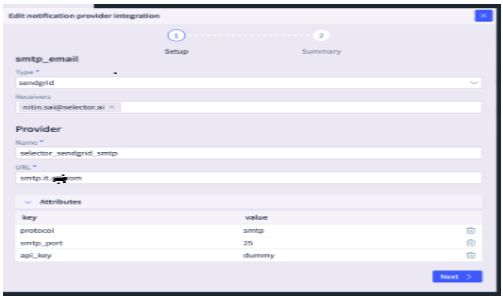
Notification provider and Rest poller configuration passwords are masked for better security. Change the type field to “secret” in any existing configuration (see bottom field in figures below).
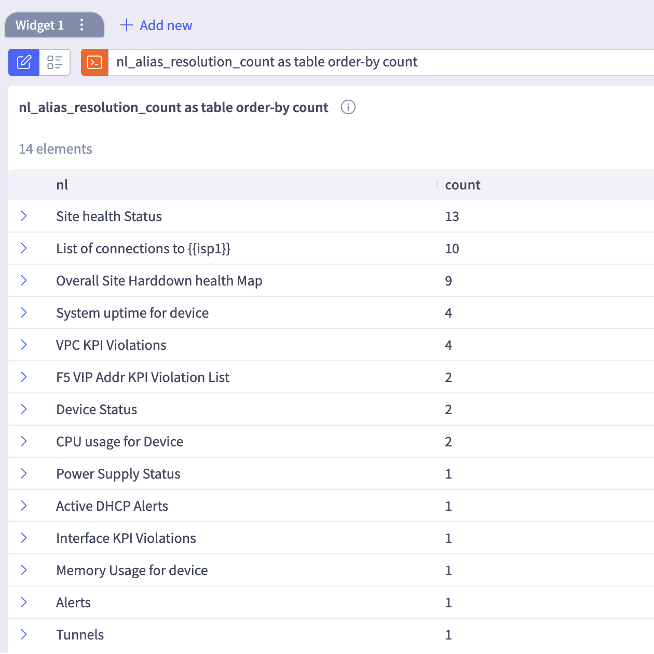
Telemetry of Most Used NL Alias Included
Note listing in figure below.
Display Thresholds on Line Plots
When more than one KPI is present in a lineplot, you need to click on a single KPI to know its corresponding threshold value.
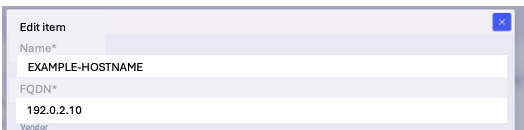
Option to Edit IP Address or Hostname in Device Inventory
There is now an option to edit the IP address or hostname in the device inventory. Customers often have a huge inventory of devices from different vendors. As new devices are added, customers often want to conserve their IP addresses, and assign a new device an existing IP address. Since device and IP are the primary keys in the device_inventory table, customers had to delete the previous entry and add a new one which is manually intensive.
With this feature, S2AP now supports editing primary keys in Metastore Inventories. This enables customers to easily automate API operations, with minimum information, allowing faster operations that are less prone to errors.
SNMP Traps Included in Correlation Engine
SNMP traps can be included in correlation engines in addition to syslogs for providing better insights.
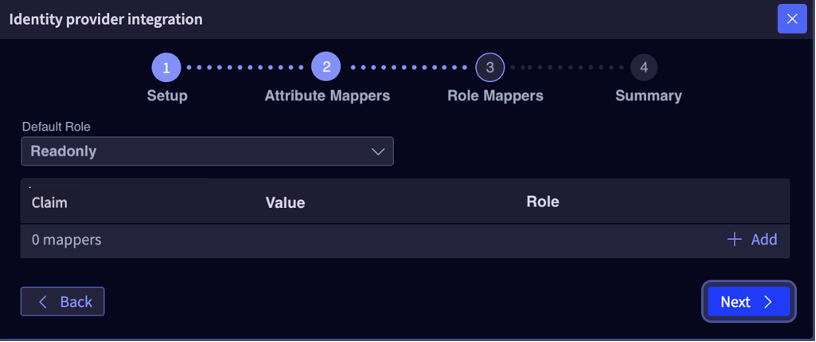
Role Mapping Support
Selector now supports dynamically mapping fields from customer’s SSO to appropriate RBAC on the S2AP platform at login time. Role Mappers can be configured in the S2AP UI providing default role mapping as well as support for SSO Claims mapping (groups etc.). This is supported across such as Azure, Google, Okta as well as any generic OIDC capable IDP.
In this way, Selector ensures an enterprise-grade experience for customers: secure right-scoped role-based user access adhering to least privilege principles. This feature enables customers to meet their user access compliance needs.
Admin Experience Enhancements
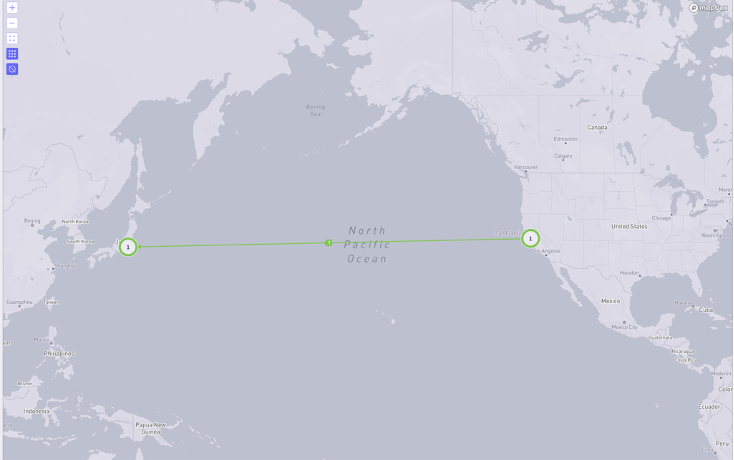
Enhanced Topology Map
The topology map view is now enhanced to show direct routes.
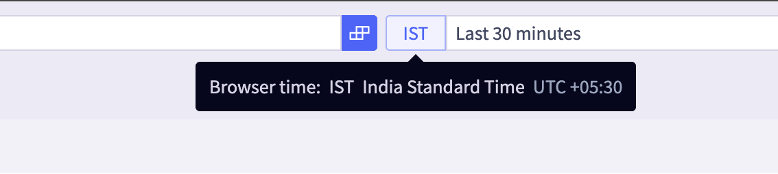
Timezone and Timestamp Hover
You can now hover and view timezone and timestamp information for better visibility.
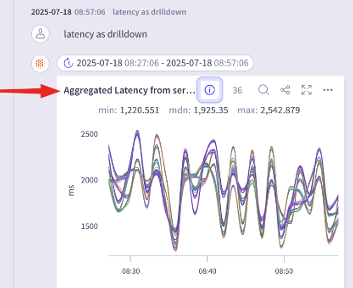
Drilldown Widget Descriptions
Widget descriptions are now included for drilldown queries.
Metastore2 API Enhancements
The v1 version of Inventory management APIs used for managing entries in a device inventory used a system generated id for inventory management operations like GET, PUT, DELETE.
The Metastore2 Inventory Management APIs have been enhanced to perform operations using Primary Keys. These are the v3 APIs. This greatly simplifies the device inventory management operations for customers who can use known primary keys rather than requiring them to track a random internal system ID.
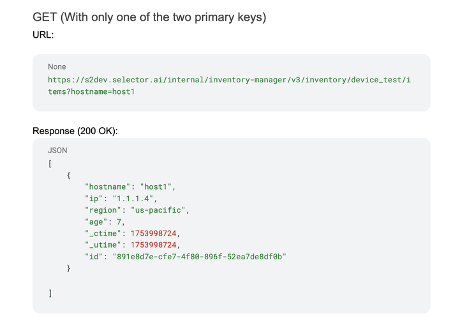
With v3 APIs it is possible to retrieve a single entry in an inventory (GET operation) using all primary keys or with a single primary key when multiple primary keys are present.
The example below shows PUT and DELETE operations with Primary keys:
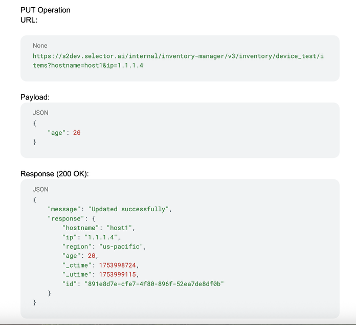
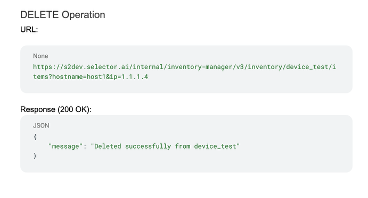
Primary keys for device_test inventory are ip and hostname, the example below shows a GET operation with only one of two primary keys:
3 - Selector Release Notes Version 3379 May 5 to July 14 2025
Selector Release Notes for Version 3379
New Features and Enhancements
Selector support with MCP
Selector supports the Model Context Protocol (MCP) which provides a standard way for AI models/LLMs to communicate with a variety of data sources and tools (similar to plugging in a standard USB device), providing an enhanced querying experience to customers,
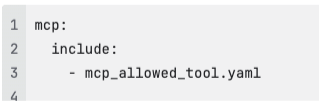
Selector’s MCP Server enables Claude Desktop to securely interact with Selector’s APIs, run queries, and access AI-powered tools-all via the Model Context Protocol (MCP).
The following tools are integrated with MCP server:
ask_selector: Allows users to send a chat-style question or content to the Selector AI and receive a conversational response. Input is validated using Pydantic and sent to the /api/collab2-slack/copilot/v1/chat endpoint.
query_selector: Enables execution of S2QL queries (structured queries for logs, events, or metadata) via the Selector backend. Only commands starting with #select are accepted, and results are fetched from /api/collab2-slack/command.
get_selector_phrases: Fetches predefined phrases or aliases from Selector, optionally filtered by a specified source (e.g., “user”, “s2ml”, or “widget”), using the /api/nlt2/alias endpoint.
Support Dashboard Variables in Natural Language (NL) Queries
The S2AP platform supports dashboard variables allowing the ability to filter on metastore entity properties such as site, model, vendor and devices for dashboard display. This feature extends Dashboard variable support to Natural Language queries while interacting with ChatOps interfaces in S2AP UI, or Collaboration tools like Slack or Microsoft teams, providing consistent and enhanced user experience with queries.
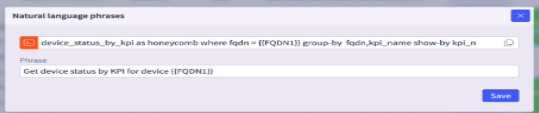
Netbox Enhancements
Netbox widgets are included into the Netbox folder, added to dashboards directory and it can support up to 20K entries.
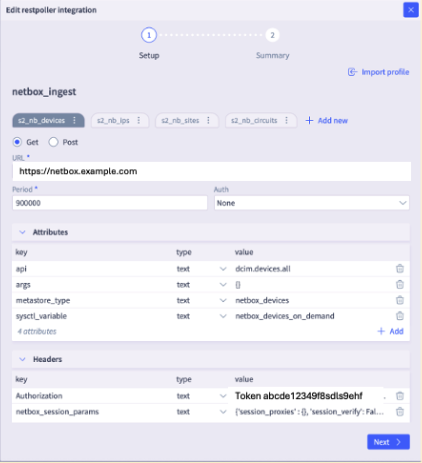
RBAC Enhancements
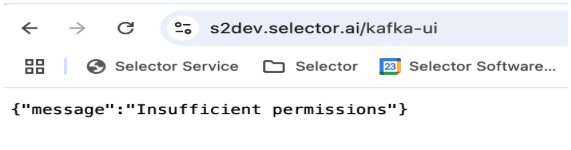
Selector supports secure and least privilege access principles by ensuring that only admin users have access to integrations, and S2AP internal systems like Mongo DB and Kafka. Non-admin users will not have access to these. If any data is accessed from Mongo DB or Kafka, access log is included for auditing purposes.
User have the ability to create and view aggregate routes:
- Authorized users can now create and view an aggregate collection for internet routes.
- Like the aggregate views provided for L3VPN routes, authorized users can now query the aggregate views for internet routes as well.
Admin Experience Enhancements
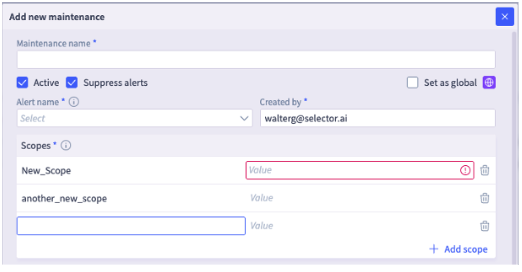
Maintenance window scope names are case insensitive
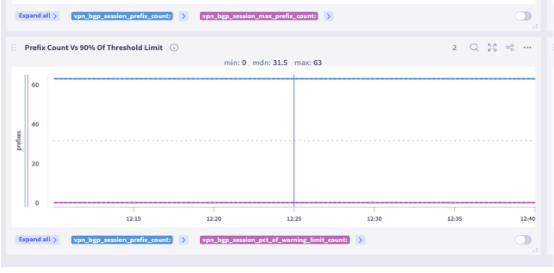
Optional Dotted Median Lines in a Line Plot
For better readability, dotted median lines in a Line Plot are optional.
For mongodb, an IP address prefix, both the low and high value of the prefix range, is converted into a big integer (bigint) format. For example, the prefix 10.0.0.0/8 is converted into low bigint 167772160 and high bigint 184549375 for mongo aggregation pipelines.
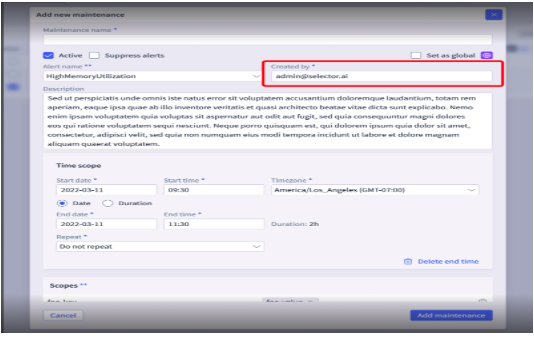
Maintenence Window Creator
When duplicating the maintenance window, will now show ‘created by’ as ‘current logged in user’ instead of the originator.
Topology View Lock Settings
You can lock the topology view settings (layout) so that it stays that way even with dashboard variables.
Alert/Notification Enhancements
Resolved alerts from Selector will be excluded from rate limiting features. This will allow ITSM(BigPanda) to get notified of resolved alerts resulting in improved alert management for customers.
In addition to the previously supported Sendgrid based notifications, Selector now allows customers to configure their SMTP server for email notifications and alerting, providing improved security and email management control for customers.